Game Localization That Keeps Players Immersed.
Video game scripts, UI strings, in-app copy, tutorial flows, and narrative content localized by translators who play games and understand what players in the target market expect.
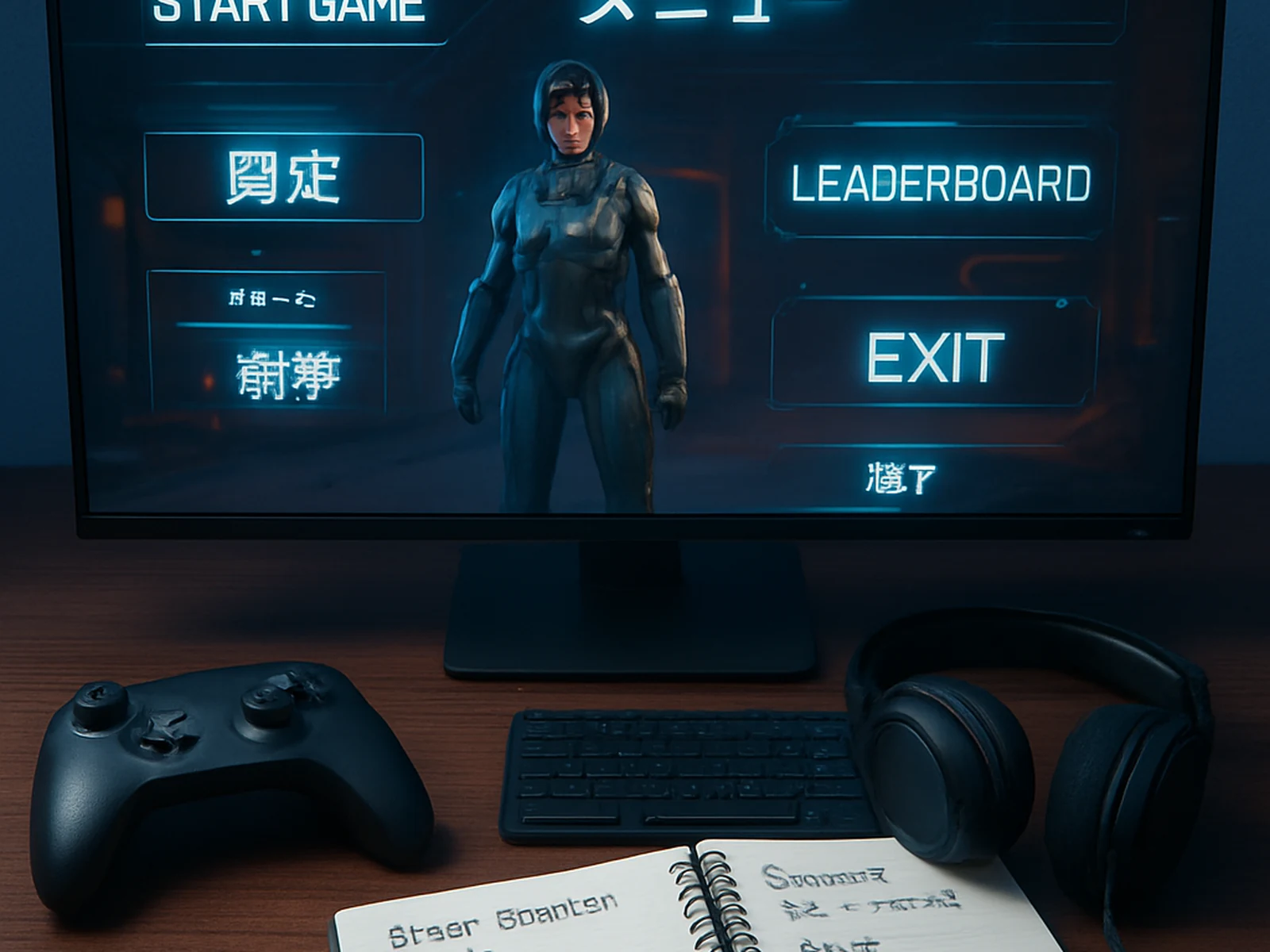
Game localization fails more visibly than almost any other translation category. Players notice bad localization. They post about it in forums, leave reviews mentioning it, and often switch to the untranslated version if one is available. A technically correct game translation that reads unnatural is worse than a slightly inaccurate one that sounds like a native game -- because players choose immersion over precision.
We approach game localization by starting with the characters. Before writing a word, we build voice guides for named characters: register (formal, casual, rough, refined), vocabulary range, speech patterns, and personality markers. In Japanese, this includes sentence-final particles and pronoun choices that define how each character is perceived. In German, it includes formality register and regional considerations. The translation follows those guides, not the English source directly.
UI strings are handled separately from narrative copy because they have different constraints -- character limits, interface context, player expectation for how menus and prompts read. We treat UI translation as a UX task, not a language task.
For mobile games, we have experience with Unreal Engine, Unity, Cocos2d, and most standard string table and localization file formats (XLIFF, PO, CSV, JSON). Console game projects are scoped individually based on platform requirements and word count.
Indie studios, mobile game publishers, and console game developers launching in new markets who need localization that works for real players.